
Any resident in the your area could be that One person infected by West Nile virus (WNV). This threat has prompted the American Mosquito Control Association to develop an important program — “I’m One” — with the overarching goal of creating and sustaining awareness of the danger of WNV. The program highlights the importance of community collaboration to reduce the threat of mosquito-borne disease. By working together, your community can enhance mosquito control, personal protection, and prevention to improve the public health in the community.
It only takes one bite from an infected mosquito to raise concern and threaten the community’s public health. But through education and awareness programs, like the “I’m One” Program, your community can help protect and prevent WNV. Several of the mosquito species that transmit WNV are short-range flyers, which means that most of these mosquitoes could be from your own backyard or a neighboring property. To protect and prevent WNV, your community must collectively work to eliminate larval development sites, treat standing water, or begin a spraying program to reduce mosquito populations. This is an excellent opportunity for communities to band together and win the war on mosquitoes. The “I’m One” Program helps bring together WNV survivors to unify their voices and foster a central rallying cry around prevention of this disease. The program includes a television public service announcement (PSA) with WNV survivors who know firsthand about the devastating effects of the disease. Dr. Don Read, a physician and WNV survivor, supports the “I’m One” Program. He said, “It’s important to have a forum to spread our message about mosquito control, personal protection, and prevention. This is a very dangerous disease, and people need to do what they can to prevent it.”
How YOU Can Help
The American Mosquito Control Association has developed the I’m One Program Outreach Guide to help you to spread the word in your own community about mosquito control, prevention, and protection.
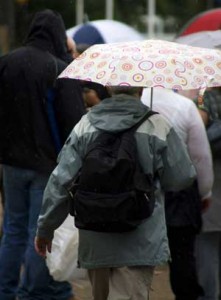 According to the March/April 2012 Science Magazine, some mosquitoes and other small insects are capable of “dancing” through the air between raindrops during a light rain. Heavy rains are a different story. If insects haven’t sought shelter, raindrops will typically knock them to the ground.
 The
The 
 Many parts of the country are expecting snow this weekend. Don’t get caught in the storm.
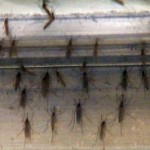 CBS recently reported on the thriving Mosquito community in New York. Those pesky, disease carrying insects are putting down roots and homesteading the New York sewer system. For an insect that thrives in warm wet environments, the sewer system in New York is a paradise. The mosquitoes come up through the cracks in the streets as well as subways, basements, and then through air-vents. This breed of mosquito is extra blood thirsty; they prefer the shadows of nightfall and are active year round.
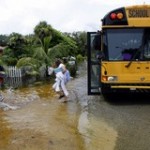 Lee-County, FL- Standing water from recent tropical storms provides the perfect breeding grounds for mosquitoes. At a time of the year when mosquito populations should be dwindling, Lee County, Florida is having an unprecedented boom in the mosquito population.
 So many things in life are acquired tastes with personal preferences. It seems mosquitoes are no different.